De Profundis by Oscar Wilde

De Profundis by Oscar Wilde

Regular price
Checking stock...
Regular price
Checking stock...
Proud to be B-Corp

Our business meets the highest standards of verified social and environmental performance, public transparency and legal accountability to balance profit and purpose. In short, we care about people and the planet.

The feel-good place to buy books
  • Free delivery in the UK
  • Supporting authors with AuthorSHARE
  • 100% recyclable packaging
  • B Corp - kinder to people and planet
  • Buy-back with World of Books - Sell Your Books
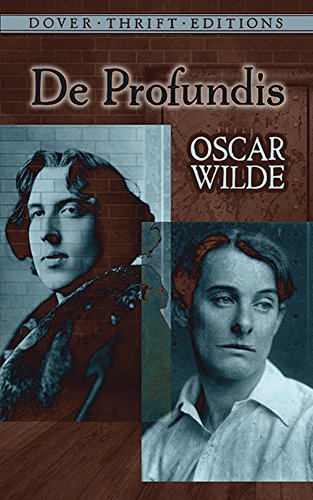
De Profundis by Oscar Wilde

In this ground breaking book, Anne Wayman, clean and sober for almost 25 years and with multiple works published by Hazelden, explores two myths that grown up in the 12 Step movement: never-ending recovery, and perpetual powerlessness.

Convinced that the 12 Steps offer the best chance for lasting recovery, she challenges the movement to acknowledge the fear behind the myths, and let them go so that the Program can reach its full potential.

Working from original source material, she explains the nature and development of the myths. She documents the damage they do to individuals and the movement as a whole, including its relative failure in areas of poverty where it is most needed.

With true compassion and understanding she shows exactly what 12 Steppers need to do to let go of the myths, and become Powerfully Recovered, as the original Program intended.

Wilde, Oscar: - Oscar Wilde (16 October 1854 - 30 November 1900) was an Irish poet and playwright. After writing in different forms throughout the 1880s, he became one of London's most popular playwrights in the early 1890s. He is best remembered for his epigrams and plays, his novel The Picture of Dorian Gray, and the circumstances of his criminal conviction for gross indecency, imprisonment, and early death at age 46. Wilde's parents were successful Anglo-Irish intellectuals in Dublin. Their son became fluent in French and German early in life. At university, Wilde read Greats; he proved himself to be an outstanding classicist, first at Trinity College Dublin, then at Oxford. He became known for his involvement in the rising philosophy of aestheticism, led by two of his tutors, Walter Pater and John Ruskin. After university, Wilde moved to London into fashionable cultural and social circles. As a spokesman for aestheticism, he tried his hand at various literary activities: he published a book of poems, lectured in the United States and Canada on the new English Renaissance in Art and interior decoration, and then returned to London where he worked prolifically as a journalist. Known for his biting wit, flamboyant dress and glittering conversational skill, Wilde became one of the best-known personalities of his day. At the turn of the 1890s, he refined his ideas about the supremacy of art in a series of dialogues and essays, and incorporated themes of decadence, duplicity, and beauty into what would be his only novel, The Picture of Dorian Gray(1890). The opportunity to construct aesthetic details precisely, and combine them with larger social themes, drew Wilde to write drama. He wrote Salome (1891) in French while in Paris but it was refused a licence for England due to an absolute prohibition on the portrayal of Biblical subjects on the English stage. Unperturbed, Wilde produced four society comedies in the early 1890s, which made him one of the most successful playwrights of late-Victorian London. At the height of his fame and success, while The Importance of Being Earnest (1895) was still being performed in London, Wilde had the Marquess of Queensberry prosecuted for criminal libel. The Marquess was the father of Wilde's lover, Lord Alfred Douglas. The libel trial unearthed evidence that caused Wilde to drop his charges and led to his own arrest and trial for gross indecency with men. After two more trials he was convicted and sentenced to two years' hard labour, the maximum penalty, and was jailed from 1895 to 1897. During his last year in prison, he wrote De Profundis (published posthumously in 1905), a long letter which discusses his spiritual journey through his trials, forming a dark counterpoint to his earlier philosophy of pleasure. On his release, he left immediately for France, never to return to Ireland or Britain. There he wrote his last work, The Ballad of Reading Gaol (1898), a long poem commemorating the harsh rhythms of prison life. He died destitute in Paris at the age of 46.
SKU Non disponible
ISBN 13 9780486293080
ISBN 10 0486293084
Titre De Profundis
Auteur Oscar Wilde
Série Dover Thrift Editions
État Non disponible
Type de reliure Paperback
Éditeur Dover Publications Inc.
Année de publication 2011-12-08
Nombre de pages 96
Note de couverture La photo du livre est présentée à titre d'illustration uniquement. La reliure, la couverture ou l'édition réelle peuvent varier.
Note Non disponible